T H E F I L M S T U D I E S W E B S I T E O F B E N T O N P A R K S C H O O L




From Wikipedia, the free encyclopedia
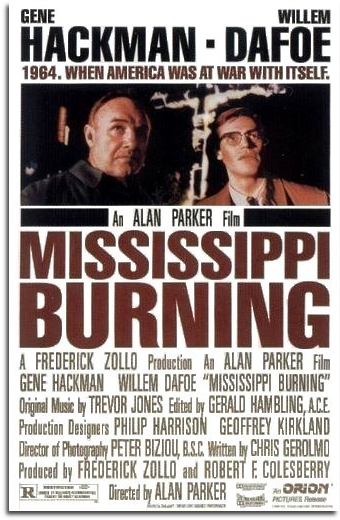
Mississippi Burning
Directed by Alan Parker
Produced by Robert J. Colesberry
Written by Chris Gerolmo
Starring Gene Hackman
Willem Dafoe
Frances McDormand
Music by Trevor Jones
Distributed by Orion Pictures
Release date(s) December 9, 1988
Running time 128 min.
Language English
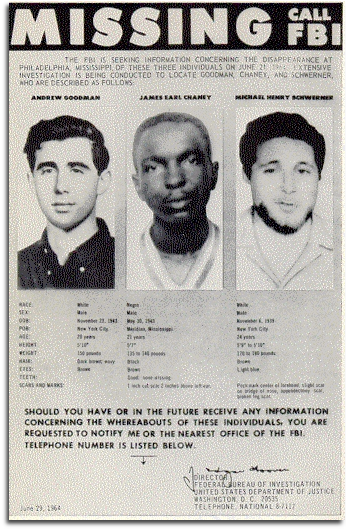
Mississippi Burning is a 1988 film based on the investigation into the real-
The film also stars Frances McDormand, Brad Dourif, R. Lee Ermey and Gailard Sartain, and was written by Chris Gerolmo and directed by Alan Parker. It won the Academy Award for Best Cinematography, and was nominated for Best Actor in a Leading Role (Hackman), Best Actress in a Supporting Role (McDormand), Best Director, Best Film Editing, Best Picture and Best Sound.
The film has been criticized by many, including historian Howard Zinn, for its fictionalization of history. While FBI agents are presented as heroes who descend upon the town by the hundreds, in reality the FBI and the Justice Department only reluctantly protected civil rights workers and protesters and reportedly witnessed beatings without intervening.[1]
Mississippi Burning was preceded in 1975 by a television docudrama titled Attack
on Terror: The FBI vs. the Ku Klux Klan, depicting many of the same events. None
of the movies used the real names of the murderers, due to legal considerations.
Mississippi Burning never even mentions the names of the victims. They are referred
to as "The Boys". The film presents the policeman's wife as the informant. The identity
of the real informant -
While the film produced an Academy award and several nominations, critics noted that blacks were portrayed in the film merely as victims who must rely on white heroes from the FBI to bring any of the criminals to justice. They point out that in a story in which black people and their struggle against injustice are paramount, there is no significant black character to represent the courage of African Americans of this period. (The character of Agent Monk, the black FBI agent who kidnaps and intimidates the mayor, was entirely ficticious; the only blacks employed by the Bureau during J. Edgar Hoover's tenure as head, were his chauffeurs.)
The opening scenes to Mississippi Burning were some of the most harrowing ever seen
in any film of the 1980s. An Apostolic church was the first building seen in the
film, ablaze with the Ku Klux Klan calling card -
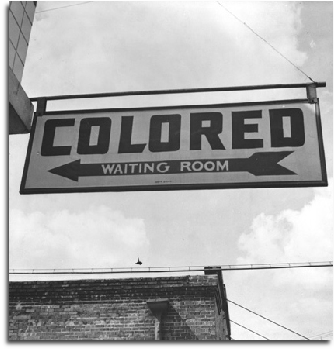
Ku Klux Klan (KKK) is the name of organizations in the United States that have advocated
white supremacy, racism, anti-
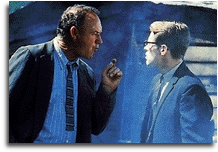


Buddy cop film
From Wikipedia, the free encyclopedia
The "buddy cop" subgenre of buddy films are actions films with plots involving two
men of very different and conflicting personalities who are forced to work together
to solve a crime and/or defeat criminals, sometimes learning from each other in the
process. The two men are normally cops, but some films, such as 48 Hrs. (cop and
an ex-
Frequently, although not always, the two heroes are of different ethnicities or cultures.
However, regardless of ethnicity, the central difference is normally that one is
"wilder" than the other: a hot-
In his review of Rush Hour, Roger Ebert coined the term "Wunza Movie" to describe this subgenre, a pun on the phrase "One's a..." that could be used to describe the contrasts between the two characters in a typical film.[1]
The cliche was satirized in the film Last Action Hero. In the Movie City police department, all cops are obligatory assigned a conflicting buddy to work with.
A subgenre of the buddy cop film is the buddy cop-
[edit] Origins
Early pioneers to the buddy film/buddy cop genre include the TV series I Spy and Starsky and Hutch, and to a lesser extent, Miami Vice.
Freebie and the Bean was one of the earliest films of the genre, while the 1982 film 48 Hrs., starring Eddie Murphy and Nick Nolte, is one of the most successful.
Examples of notable Buddy Cop films are:
* Freebie and the Bean (1974)
* 48 Hrs. (1982)
* Alien Nation (human teamed with extraterrestrial)
* Along Came a Spider
* Bad Boys and Bad Boys II (playboy teamed with family man)
* Beverly Hills Cop and its sequels (an unorthodox, street-
* Black Rain
* Blue Streak
* Bon Cop, Bad Cop (French Canadian and English Canadian cops)
* Colors
* Die Hard with a Vengeance (Caucasian cop paired with African-
* Dragnet (the 1987 film starring Dan Aykroyd and Tom Hanks)
* Hawaii Vice (genre parodying series of pornographic films pairing an Asian woman with a Caucasian male)
* Hollywood Homicide
* Hot Fuzz (genre parody and buddy cop movie by Edgar Wright, starring Simon Pegg and Nick Frost)
* The Lethal Weapon series (African-
* Metro
* Red Heat (Russian cop teamed with American)
* Rising Sun
* Running Scared
* Showdown in Little Tokyo (1991)
* Rush Hour, Rush Hour 2, and Rush Hour 3 (Chinese cop teamed with African-
* Se7en (cop approaching retirement teamed with young hothead)
* Showtime
* Starsky & Hutch (streetwise intuitive cop teamed with reserved, intellectual cop)
* Tango & Cash (smooth cop teamed with scruffy cop)
* National Security
* Bullet Proof
* The Rundown (not cops, but same idea)
| Silence of the Lambs |
| pleasantville |
| Mississippi Burning |
| Valley of Elah |
| Elephant Gus Sant |
| Narrative |
| FM4 Experimental Film |
| "Talk to Her" |