T H E F I L M S T U D I E S W E B S I T E O F B E N T O N P A R K S C H O O L




-
etc.) and the viewing problems this may create
-
-
-
-
-
-
This section is described as a “critical study”. The primary energy for this
will come from the student’s own application of learning – as outlined
above.
However, reading, reflecting upon and debating a variety of critical writing on the chosen film is also invited.
This may be regarded as a new and
additional skill being introduced at the very end of the course.
It is expected that students will go into the examination aware of the major debates (and sometime controversies) surrounding their chosen film and will have established their own critical views in the context of this knowledge.
It is assumed that this knowledge will have come from writing that has some
critical status – and is not all taken from the Rotten Tomatoes website


Section C: Single Film – Critical Study
THE EXAM (A01 and A02, 30 marks)
One question to be answered from a choice of two questions general to all films and a specific question set for each film prescribed.

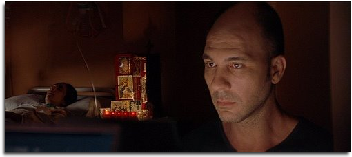
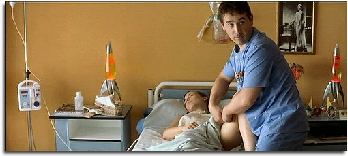
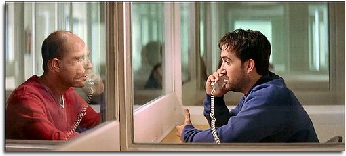

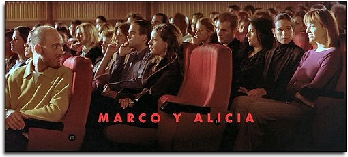
Rick Olson of the brilliant Coosa Creek Cinema; one of the blogsphere premium cinephiles, his reviews and posts on matters cinema are as entertaining as they are insightful, takes on one of the years biggest films and finds a 'believable soap opera world, shot through with danger and his signature sense of color' CLICK
The ability of candidates to engage in critical study of a single film is examined in this
section.
The synoptic dimension is clear – as there is the expectation that the candidate's cumulative learning will be brought to bear in this study.
Critical approaches that may be applied include those arising from the frameworks
for the FM3 research project while contextual study will consolidate work completed
for FM2 and FM4 Sections A and B.
The role of macro and micro elements of film in the construction of meaning and the creation of emotion informs the specification as a whole.
Each of the films available for study has given rise to much debate in its critical
reception and each lends itself to study within one or more of the critical frameworks
listed for FM3.
A consideration of some of these debates (see below) and the application of critical frameworks will provide the basis for the candidate's own engagement with the film.
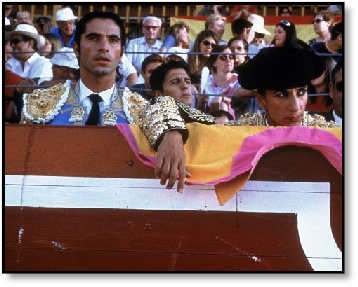



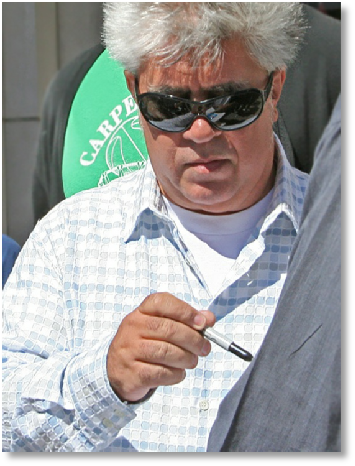
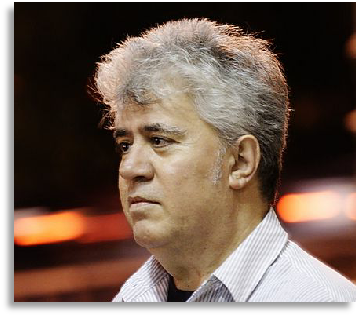
Early life
Pedro Almodóvar Caballero was born in Calzada de Calatrava, Spain, a rural small
town of Ciudad Real, a province of Castile-
He was born as one of four children (two boys, two girls) in a large and impoverished family of peasant stock. His father, Antonio Almodóvar, who could barely read or write, worked most of his life hauling barrels of wine by mule.
Almodóvar's mother, Francisca Caballero, turned her son into a part-
When Pedro was eight years old, the family sent him to study at a religious boarding school in the city of Cáceres, Extremadura, in the west of the country, with the hope that he might someday become a priest. His family eventually joined him in Cáceres, where his father opened a gas station and his mother opened a bodega where she sold her own wine.
While Calzada did not have a cinema, the streets where he lived in Cáceres contained not only the school, but also a movie theater.
“Cinema became my real education, much more than the one I received from the priest,” he said later in an interview.
Almodóvar was influenced by such directors as Luis Buñuel, Rainer Werner Fassbinder, Alfred Hitchcock, John Waters, Ingmar Bergman, Edgar Neville, Federico Fellini, George Cukor, Luis García Berlanga and neorealist Marco Ferreri.
Against his parents' wishes, Pedro Almodóvar moved to Madrid in 1967. His goal was
to be a film director, but he lacked the economic means to do it and besides, Franco
had just closed the National School of Cinema so he would be completely self-
To support himself, Almodóvar worked a number of odd jobs, including a stint selling
used items in the famous Madrid flea market El Rastro. He eventually found full-
Beginnings
In the early seventies, Almodóvar grew interested in experimental cinema and theatre. He collaborated with the vanguard theatrical group, Los Goliardos, where he played his first professional roles and met Carmen Maura. He was also writing comics and contributing articles and stories to a number of counterculture magazines, such as Star, Víbora and Vibraciones.
Madrid’s flourishing alternative cultural scene became the perfect scenario for Almodóvar's social talents. He was a crucial figure in La Movida Madrileña (Madriliene Movement), a cultural renaissance that followed the fall of the Franco regime. Alongside Fabio McNamara, Almodóvar sang in a glam rock parody duo. He published a novella, Fuego en las entrañas (Fire in the Guts). Writing under the pseudonym "Patty Diphusa", he penned various articles for major newspapers and magazines, such as El País, Diario 16 and La Luna. He kept writing stories that were eventually published in a compilation volume, El sueño de la razón (The Dream of Reason).
This from Wikipaedia, more on his life HERE